
EXCAVATION ATTACHMENTS
Will a bucket handle hard ground, or do you need a hydraulic breaker?
A bucket handles excavation and loose material; a hydraulic breaker fractures suitable hard material before removal. The choice depends on what the ground contains, the surroundings and the proposed machine. A photograph or the phrase 'hard soil' cannot settle the decision.
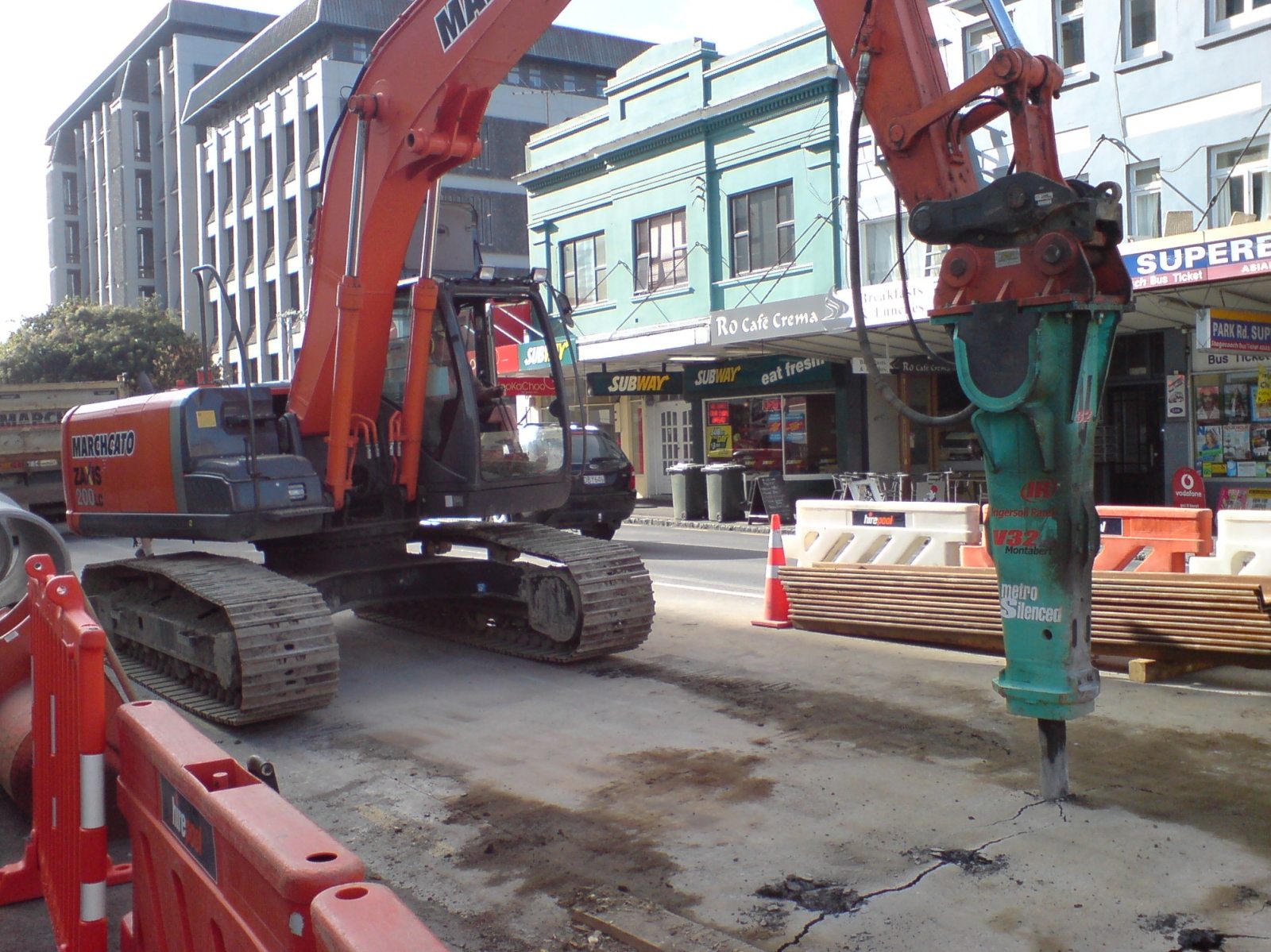
1. Find out what 'hard ground' means on your site
Dry compacted soil, weathered rock, a buried brick footing and reinforced concrete are different problems. Loose rubble may need excavation and sorting; solid material may need breaking. Its amount, thickness, condition and location can change the equipment proposal.
Hydraulic breakers are impact attachments used for rock excavation, concrete work and demolition. That explains their general role, not whether a particular patch of your site needs one. Avoid booking from a surface photograph alone, especially where an old structure, previous filling or buried services could explain what lies below.
2. Give the supplier evidence, not a hardness guess
Collect drawings, site history, photographs of exposed material and any ground-investigation information. Mark the work area and intended depth or removal limit. If a contractor previously encountered resistance, share the observations rather than saying the last machine was too small.
Where the material remains uncertain, ask for an assessment before committing to a fixed equipment plan. Any investigation or trial excavation should be planned by competent people after utility and structural risks are addressed. Agree a review point if unexpected rock, reinforcement, a void or unidentified services appear; do not ask an operator to force progress.
3. Use the material to frame the equipment discussion
Ask whether the assessed material needs fracturing before excavation and whether the site can accommodate that process. Even a recognised breaker application may need another method where vibration, access or surrounding structures make impact work unsuitable.
On a small screen, scroll the table sideways. Keyboard users can focus the table area and use the arrow keys.
| What is known | Starting discussion | What must be checked |
|---|---|---|
| Soil or already loose rubble | Suitable digging bucket | Buried hazards, material size and carrier suitability. |
| Uncertain hard layer | Assessment before attachment choice | Material extent and approved investigation method. |
| Confirmed rock or concrete requiring fracture | Compatible breaker package | Material, surroundings and an acceptable work method. |
| Reinforced or structural element | Demolition specialist's plan | Stability, reinforcement and separate handling needs. |
4. Confirm the whole breaker-and-carrier combination
A breaker that physically hangs from an excavator is not necessarily compatible. Manufacturer specifications for a given breaker model typically list a carrier weight class, attachment weight, oil flow, operating pressure and working-tool details, and usually require any variation from the standard carrier to be agreed with the manufacturer. These are separate checks, not one tonnage match.
Ask the supplier to approve the actual carrier, mounting or coupler, auxiliary hydraulic supply, hoses and return arrangement, and the tool selected for the material. The operator must be trained for that combination and follow both manufacturers' instructions. Do not change hydraulic settings or adapt connections yourself to make an available attachment work.
- Request the carrier model and exact breaker model.
- Confirm who verifies compatibility and installs the attachment.
- Ask what operator support, inspection and servicing arrangements are included.
5. Separate equipment selection from permission to break
An old slab may conceal services or connect to a footing. A boundary wall may depend on the ground you intend to remove. Before structural or demolition work, obtain an appropriate survey and a competent contractor's method, addressing stability, neighbouring property, utilities and hazardous materials where relevant. A suitable attachment does not make an unassessed structure safe to disturb.
The plan should address dust, noise, vibration, flying debris and separation of workers and the public. Overhead lines also matter when moving or positioning equipment. Confirm local permissions and restrictions with the appropriate authorities and project professionals.
6. Include the bucket stage and an uncertainty plan
Breaking is not the end of the job. Fractured material still needs to be gathered, possibly separated from reinforcement, loaded and removed. Ask whether the same carrier will change back to a bucket or whether separate handling equipment is proposed. Confirm who performs changes and how debris will leave without blocking access or overloading an unsuitable area.
For uncertain conditions, agree how proposals are reviewed before extra equipment or time is authorised. Clarify transport, attachments, operator support and any standby terms without assuming a charging policy. RIGR must check compatible breaker and carrier availability for your location and dates.
Questions before you book
Does hard soil always need a hydraulic breaker?
No. 'Hard soil' does not identify the material or the correct method. A supplier and competent site professional should review the evidence before recommending a bucket, breaker or another approach.
Can a breaker be fitted to any mini excavator?
No. Carrier suitability, attachment weight, mounting, hydraulic flow and pressure, and the required working tool must all be checked. Confirm the exact combination, not just the excavator's size class.