
FORKLIFT RENTAL
Electric vs diesel forklift: start with your site, not the price
For enclosed warehouse work, battery-electric is usually the first option to assess. For outdoor duties, compare the actual truck and route. Neither power source fixes an unsuitable floor, and neither is automatically the cheaper rental.
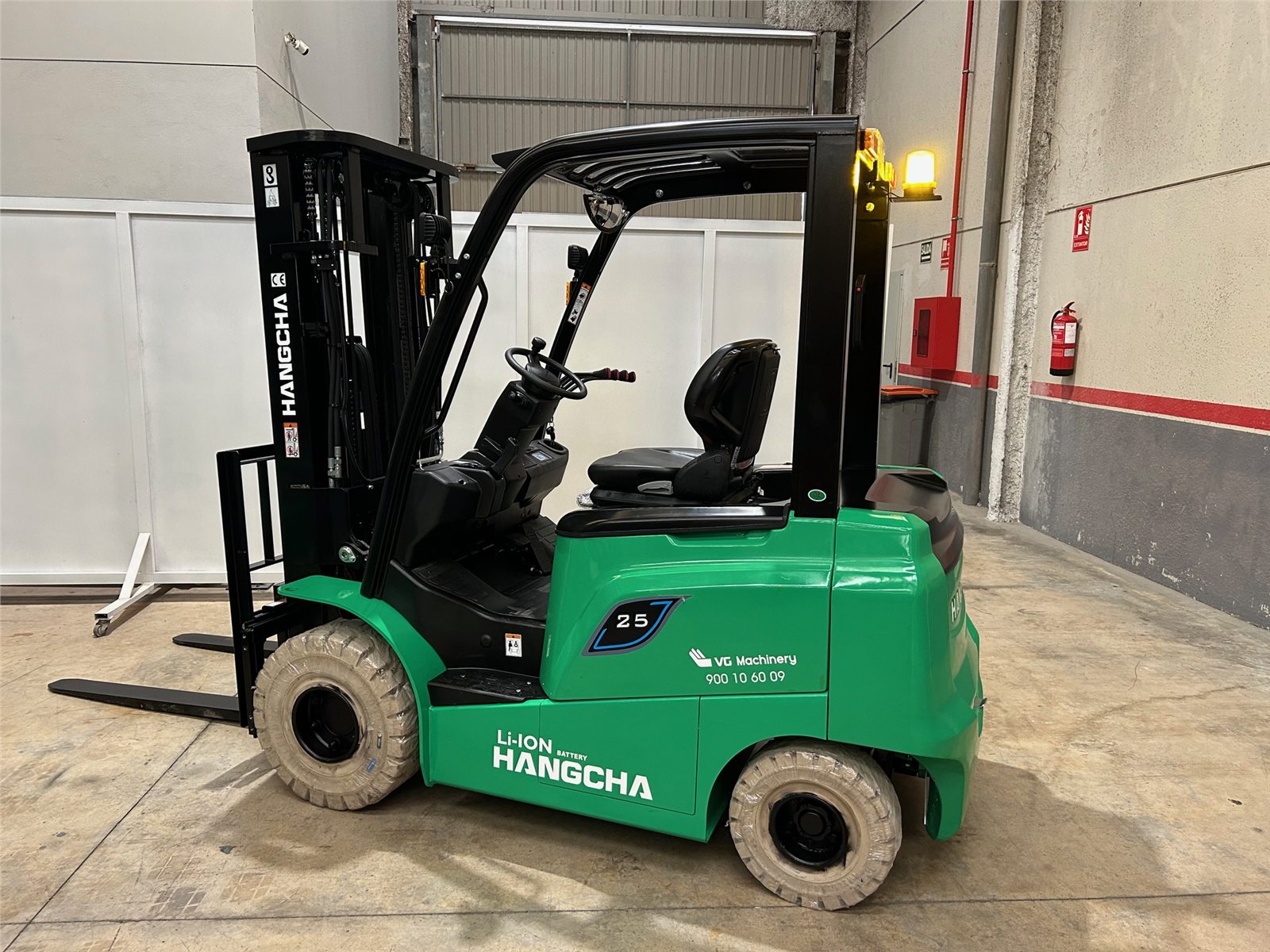
1. Start with where people breathe
Mark every enclosed part of the route: receiving bays, production rooms, storage aisles and containers. A battery-electric forklift has no tailpipe exhaust at the point of use. That is a useful distinction in an occupied building, but not a claim of zero lifecycle emissions: electricity generation and battery production still matter.
Diesel produces exhaust. Do not treat an open shutter or a short indoor visit as proof that exposure is controlled. Ask the site's safety team to assess any proposed combustion-engine use indoors. A truck chosen for yard work may be the wrong answer once its route enters a shed.
2. Walk the whole route, including the awkward bit
Describe the surface rather than simply saying 'outdoor': sound concrete, broken paving, loose ground, wet patches or a dock transition. Include gradients, narrow turns, doorways and drainage. Ask the supplier to confirm tyres, ground clearance and permitted conditions for the offered model.
Some electric forklifts are designed for indoor and outdoor use. That does not make every electric truck rain-suitable. Equally, a diesel forklift is not automatically a rough-terrain machine. During the monsoon, exposure, traction and the condition of the route need attention regardless of fuel type.
3. Make the energy plan fit the shift
For electric hire, ask which battery and compatible charger are supplied, what electrical connection is needed, and where charging can happen. A nearby socket is not confirmation that the installation is suitable. Share actual working hours, lifting intensity, breaks and any second-shift requirement.
Charging arrangements depend on battery technology. Do not assume every battery supports charging during short breaks. Lead-acid charging brings ventilation and handling hazards; lithium-ion needs its own manufacturer-approved arrangements. Agree who checks the installation and who handles battery-related work.
For diesel, confirm fuel responsibility, refuelling arrangements and permitted storage. Fast refuelling alone does not settle the decision if the route or air-quality requirements rule the truck out.
4. Use this first-pass comparison
This table narrows a discussion; it does not approve a machine. Load capacity, mast clearance and operator suitability still need checking separately.
On a small screen, scroll the table sideways. Keyboard users can focus the table area and use the arrow keys.
| Your working condition | What to assess first | Do not assume |
|---|---|---|
| Mostly enclosed, occupied warehouse | Battery-electric and a workable charging plan | Diesel is acceptable because a door stays open |
| Indoor work plus a paved yard | An electric or other truck explicitly suited to both areas | All electric trucks must stay indoors |
| Long shifts with limited charging access | Battery arrangements versus a suitable fuelled option | One battery necessarily covers the whole shift |
| Broken ground, gradients or standing water | Route assessment and a suitable equipment specification | Diesel power makes an ordinary forklift all-terrain |
5. Follow one pallet through a hypothetical factory
Imagine a packaging unit receiving pallets in a paved yard, then moving them through a production shed to storage. Choosing diesel only because unloading begins outdoors ignores most of the journey. A suitable outdoor-capable electric truck may cover that route, provided its charging and surface requirements can be met.
Now suppose the same route crosses a damaged threshold and a rainwater collection point. The useful next step is to assess and resolve those conditions, not merely change the fuel choice. If separate trucks are proposed for yard and indoor work, check the handover space and extra handling involved.
6. Compare complete quotes, not just hire charges
Once suitable options are identified, request comparable scopes. The following are questions to agree in writing, not statements of RIGR policy. A lower hire charge is not helpful if essential support or energy arrangements are missing.
- Which truck, tyres, mast and attachments are included?
- Who provides the operator, charger or fuel, and delivery and collection?
- What working hours are covered, and how are additional hours handled?
- Who responds to breakdowns or charging problems, and what happens while work is stopped?
Questions before you book
Is an electric forklift always cheaper to rent?
No. Compare the offered hire scope, energy arrangements, transport, working hours and support. Potential operating-cost advantages do not establish the total cost of a particular rental.
Can an electric forklift work outside during the monsoon?
Only if the specific model and its configuration are suitable for the expected exposure and route. Ask for manufacturer guidance; do not infer weather suitability from the word 'electric' or from another model's capabilities.