FORKLIFT RENTAL
Forklift container unloading: check the access before booking
Book the unloading arrangement, not just a forklift tonnage. Confirm where the container will sit, whether the truck can enter and handle the cargo, and whether every supporting surface and access device is suitable.
1. Establish where the container will be
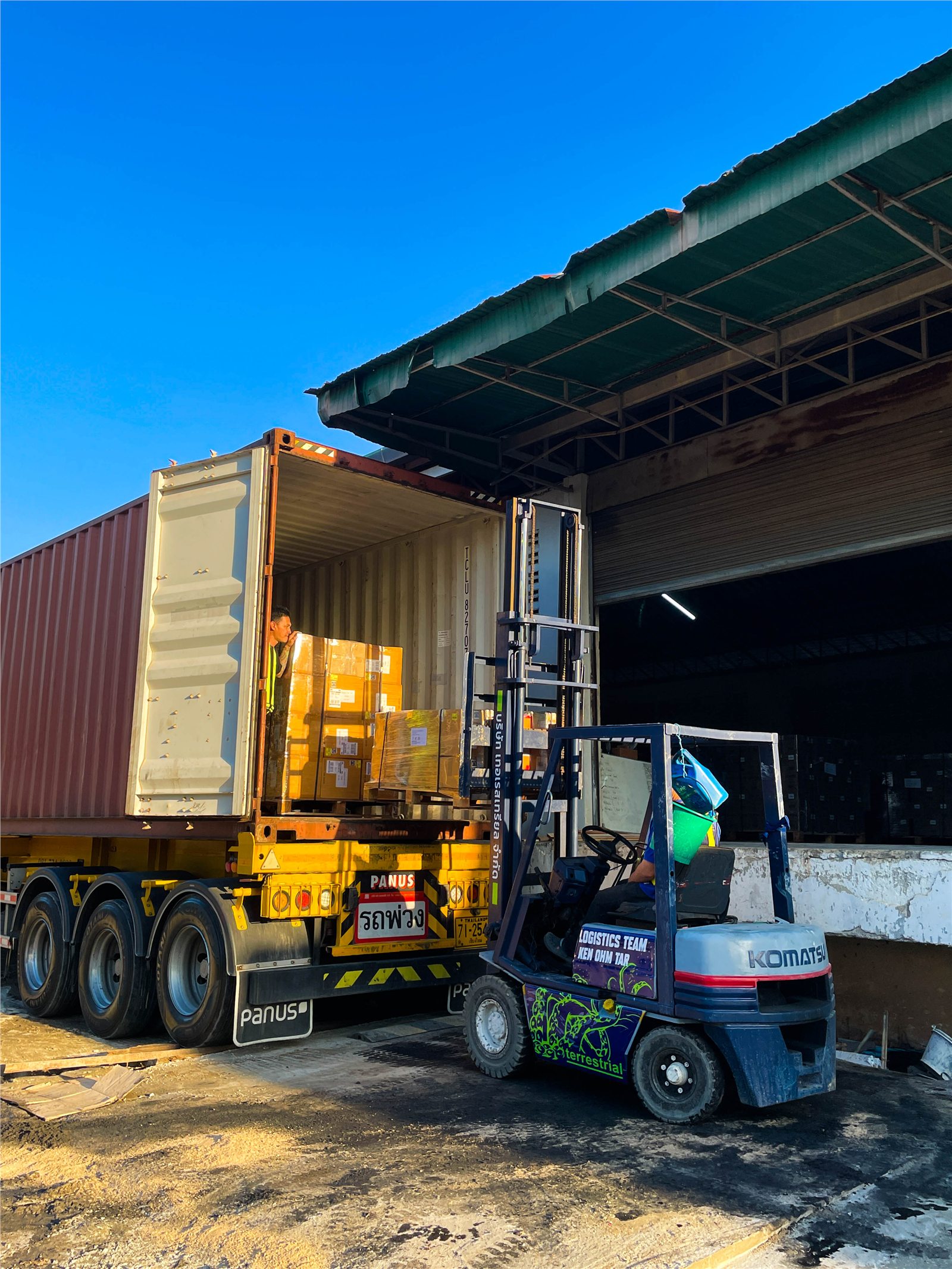
Will it remain on a trailer at a loading dock, arrive on a trailer beside an open yard, or be placed on the ground by a separately arranged service? These are three different situations. Hiring a forklift to remove cargo does not include lifting the container itself.
At a dock, confirm the dock-to-vehicle interface. In a yard without a dock, there is no automatic drive-in route from ground level to a trailer. A ground-placed container can still have a raised threshold. Have the supplier and site team confirm a suitable access or alternative handling arrangement; do not improvise ramps from loose plates or timber.
2. Check what happens after the truck enters
Provide the actual door opening and internal clearance, not only '20-foot' or '40-foot container'. Check the offered truck's overall height, including overhead guard, lowered mast and load backrest, as well as its width and turning requirements.
Then check the lifting movement inside. Free lift means the forks can rise a specified distance before the mast rails extend upward. It can help with low overhead clearance, but the load and backrest still rise. Ask whether the exact mast offers enough clearance for the proposed handling movement.
A truck fitting through the door does not prove that it can lift the pallet inside. Do not remove protective components to make an unsuitable machine fit.
3. Check the supporting surfaces and restraint
The cargo weight is only part of what an access device must carry. Ask the responsible parties to verify the suitability and condition of the dockboard or dock leveller, trailer deck and container floor for the loaded forklift, including the truck's own weight and relevant wheel loads. A forklift capacity rating is not a floor-capacity rating.
Confirm suitable vehicle restraint, braking and any required support for the trailer. Trailer movement or separation from the dock can create a gap even after work has started. The site and transporter need a clear arrangement preventing premature departure and a process for stopping work if conditions change.
4. Find out how the cargo is packed
Request gross pallet or crate weights, dimensions, fork-entry details, internal arrangement and photos or a loading plan. Cargo may be floor-loaded rather than palletised, or packed so tightly that normal fork entry is unavailable. The appropriate unloading method may therefore involve something other than driving a forklift into the container.
Check for shifted loads and damaged pallets before unloading or removing restraints. Do not assume the transport layout remains unchanged on arrival. Also assess lighting and ventilation for enclosed work, and keep people who are not involved away from the operation. A short task is not a reason to skip these checks.
5. Put the interfaces into the booking checklist
When the transporter, warehouse and equipment supplier are different businesses, each may assume somebody else provides a missing item. Record who supplies, checks and authorises each part; do not rely on a verbal promise that 'unloading is included'.
On a small screen, scroll the table sideways. Keyboard users can focus the table area and use the arrow keys.
| Item to confirm | Question to settle |
|---|---|
| Delivery position | Who confirms trailer or ground placement and access? |
| Forklift and operator | Who provides a suitable truck and trained operator? |
| Dockboard, leveller or access equipment | Who supplies it and verifies suitability and capacity? |
| Vehicle restraint and trailer support | Who establishes and checks the agreed arrangement? |
| Cargo and unloading method | Who provides load information and approves the handling plan? |
| Arrival slot and waiting | Who coordinates the parties, and what terms cover delay? |
6. Resolve missing information before dispatch
Imagine a hypothetical importer booking a forklift because each pallet is within the quoted nominal tonnage. The container arrives on a trailer, but the site has no dock and nobody has arranged suitable access equipment. The weight information has not solved the real problem: reaching the cargo safely.
Share site and cargo details before confirming the booking. Ask for unresolved assumptions to be listed, especially access equipment, mast clearance and the handling method. If the delivery position or cargo changes, obtain a fresh review. The arrival of a hired truck should not become pressure to invent an unsafe unloading solution.
Questions before you book
Does a three-stage mast guarantee container entry?
No. Check actual lowered height, overall truck height, free lift and the rising load/backrest against the container. The number of mast stages alone does not confirm suitability.
Can we unload without a loading dock?
Sometimes, using a properly planned alternative arrangement. Ground placement and trailer-height delivery need different checks. Ask for a confirmed method and suitable equipment; this article does not provide ramp dimensions or construction instructions.
Can I book from the container size and total cargo weight?
Those details are insufficient. The supplier also needs the delivery position, individual load weights and dimensions, packing arrangement, entry clearances and site conditions to assess an unloading method.