
FORKLIFT RENTAL
Why a 3-tonne forklift may not lift your 3-tonne load
A '3-tonne forklift' is not a promise to lift every load weighing 3,000 kg. Capacity depends on the stated load centre, truck configuration and lifting conditions. The actual capacity plate and manufacturer information must match your job.
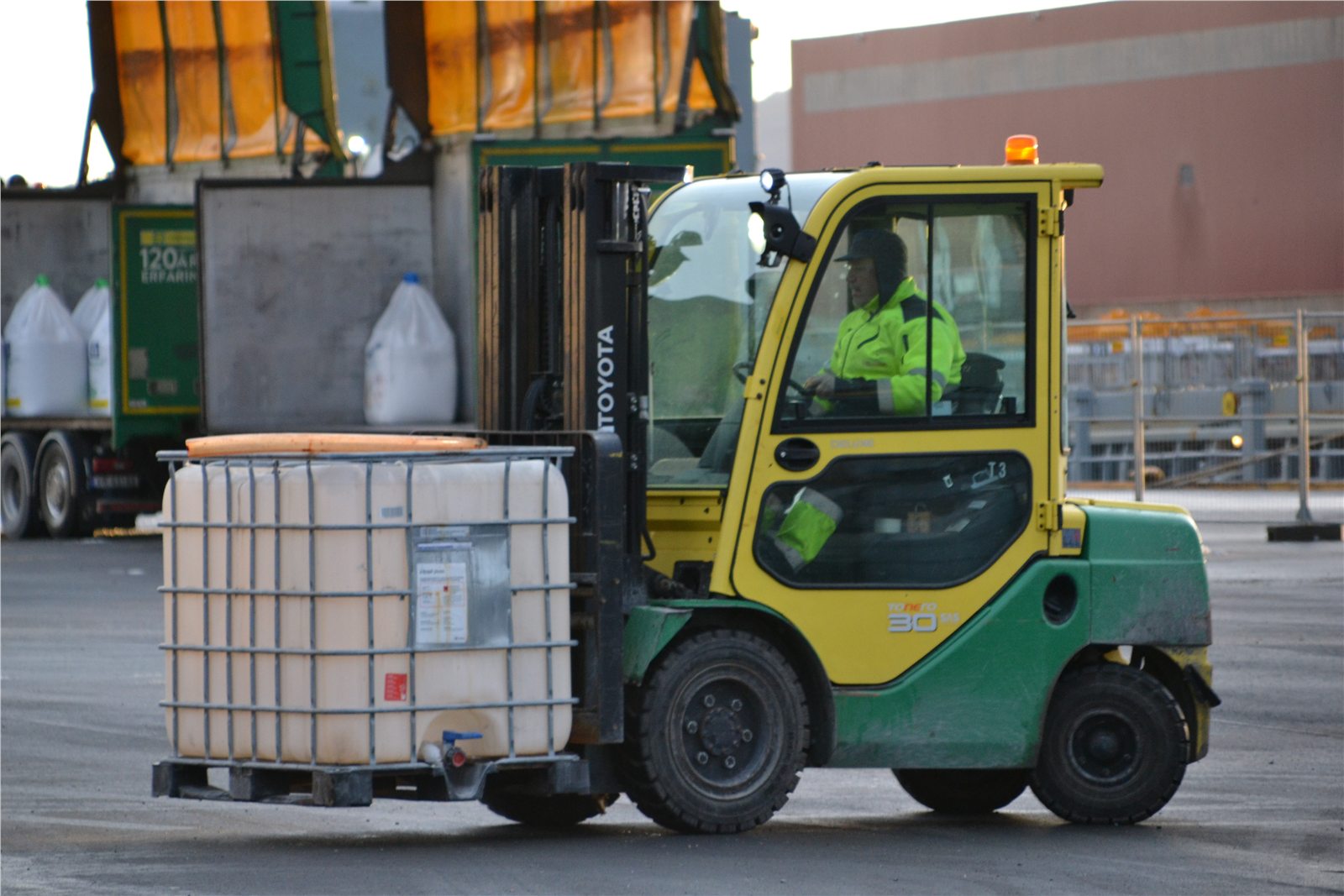
1. Read rated capacity as a conditional statement
The advertised tonnage describes a rating under specified conditions. Those conditions matter as much as the number. A capacity plate, also called a data plate or nameplate, connects the truck's identity and configuration to its permitted load-handling limits.
Start with the gross lifted load: goods plus pallet, crate, packaging and other items carried with them. A purchase invoice showing product weight alone may not supply this. Ask for reliable weight information rather than estimating from appearance. A forklift that is already marginal on product weight has no automatic allowance for the packaging.
2. Load centre explains why shape matters
The horizontal load centre is the distance from the vertical face of the forks to the load's centre of gravity. It is not simply the fork length. Moving weight farther forward changes the balancing demand on the forklift, even when the load's total weight stays the same.
For a uniformly distributed load, the centre may be near its geometric middle. Machinery and irregular cargo can be different. A pump mounted at one end of a long skid need not balance like a pallet of identical cartons. Share drawings or declared centre-of-gravity information where available; do not assume the crate's middle is the answer.
3. Attachments can change the usable capacity
A clamp, rotator or side-shift arrangement can affect capacity through its own weight, the distance it places the load from the truck, or its permitted movements. Fork extensions are not a way to keep an unchanged lifting allowance while reaching a load farther away.
Ask whether the supplied attachment is included in the truck's approved configuration and capacity information. An attachment's own rating does not establish the combined truck-and-attachment rating. Do not subtract its weight from the advertised tonnage and call the result safe. Have the supplier obtain the appropriate manufacturer confirmation for the complete combination.
4. Reaching the shelf is not the same as lifting there
Tell the supplier the required placement height as well as the weight. The fact that a mast extends to a height does not establish that the truck can carry your load there. The capacity information must cover the relevant mast, height, load centre and attachment.
Consider a hypothetical factory moving the same machine first from a delivery vehicle to the floor, then into an elevated storage position. These are not automatically interchangeable tasks. Confirmation for the first move should not be stretched to cover the second. Where capacity information is unclear, ask the manufacturer or authorised technical representative to resolve it before dispatch.
5. Send a load brief that can actually be checked
Photos are useful, but they do not prove weight or capacity. Combine them with the details below so that the supplier can assess a particular truck rather than quote only a nominal size.
On a small screen, scroll the table sideways. Keyboard users can focus the table area and use the arrow keys.
| Send this information | Why it matters |
|---|---|
| Gross weight and its source | Includes the pallet or crate, not only the product |
| Length, width and height | Describes the load envelope and possible load-centre issue |
| Fork-entry direction and pallet details | Shows how the load will sit on the forks |
| Known uneven weight distribution | Flags machinery or cargo that is not centrally balanced |
| Required placement height | Lets the supplier check capacity for that lifting condition |
| Required attachment | Identifies the complete combination needing confirmation |
6. Check the truck that arrives
Request a legible capacity-plate photo and model/configuration details for the offered truck. At handover, make sure the delivered machine and attachment match that information. A last-minute substitute with the same advertised tonnage still needs checking.
If the plate is missing, unreadable or inconsistent with the attachment, pause the job until the supplier resolves it. Do not use a rough capacity formula or a trial lift as proof of suitability. A load leaving the ground does not demonstrate safe operation through the complete movement. This selection check also does not replace inspection or a trained operator.
Questions before you book
Will longer forks let the truck lift a longer load safely?
Not by themselves. Fork suitability, load position and the approved configuration must be checked. Longer forks do not cancel the effect of a load centre farther from the truck.
Can I use an online derating calculator to choose the rental size?
Do not use it as lifting approval. A simple formula cannot confirm all configuration and stability limits. Ask for capacity information applicable to the actual truck, attachment, load and required height.
Should I simply book the next tonnage up?
A larger truck may be one option, but it still needs capacity verification and may need more aisle space or impose greater floor loads. Select a confirmed configuration, not a guess at extra tonnage.