
RIGR RENTAL GUIDES / TRENCHLESS WORKS
Hiring an HDD contractor? Ask how they’ll drill the rock and track the bore
Two HDD contractors quote for the same fibre duct crossing. One prices every metre of duct installed. The other quotes for drilling in ordinary soil, with rock tooling and standby charged separately. Both give you a rate per metre. Which one can finish the crossing within your budget?
Before booking a horizontal directional drilling (HDD) machine, ask to speak to the operator and the person who will track the drill head. Give them the route. Ask where they expect trouble, what would make them stop and what they’ll hand over when the duct is in the ground. Their answers tell you what you’re buying.
1. How is horizontal directional drilling done?
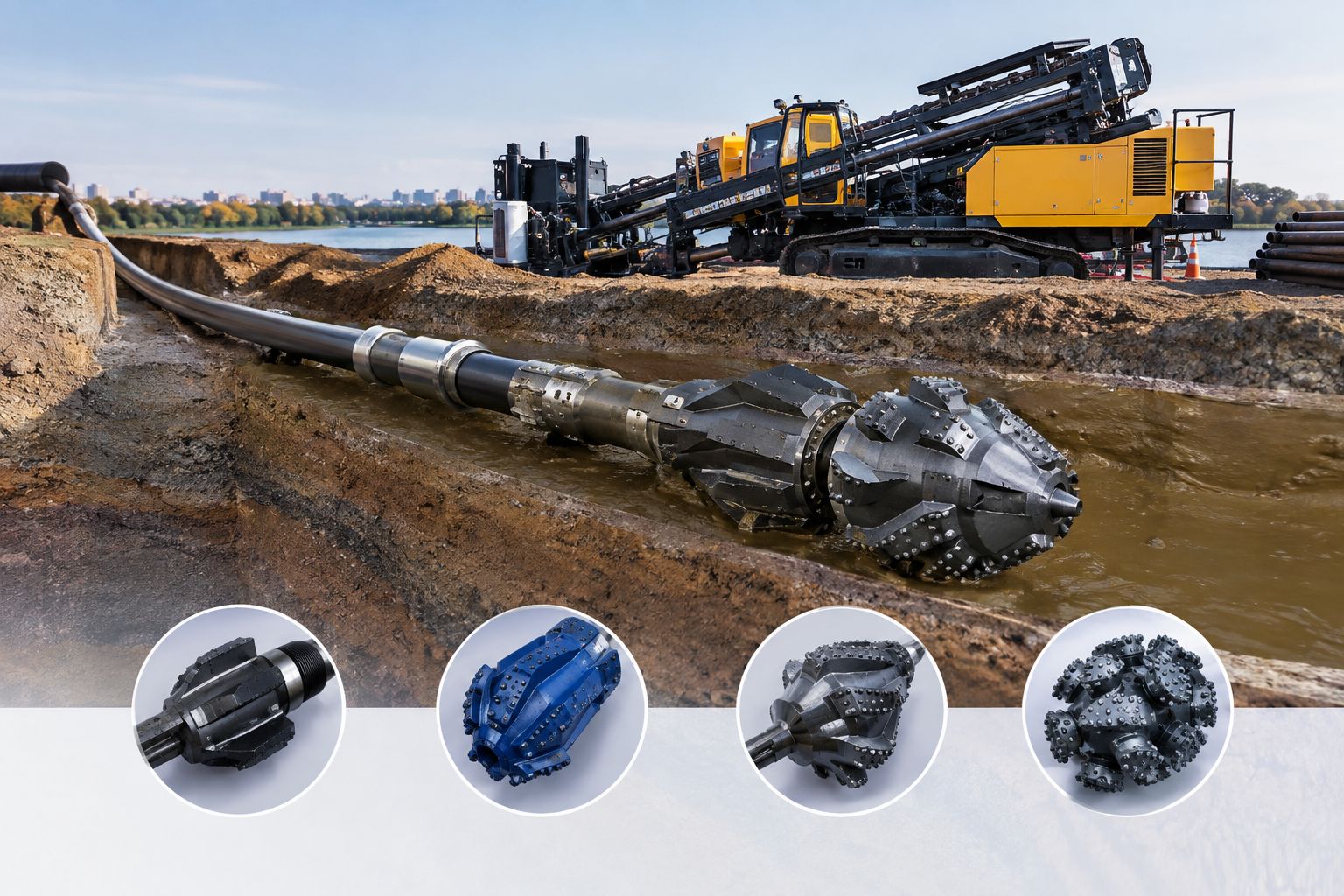
For a typical road crossing, the crew drills a small, steerable pilot bore from the entry side to the exit. The pilot establishes the route. A larger cutting tool called a reamer enlarges the hole as needed, and the rig pulls the duct or pipe through the prepared bore. Reaming and pullback can be combined where the design allows.
If you want to know how to run an HDD machine, start with the two jobs involved. The trained rig operator controls the advance, rotation and drilling fluid at the machine. The tracker locates the head and communicates its position and orientation so the operator can steer. Machine-specific training and supervised experience matter. From the controls alone, the operator cannot see what the bit is approaching.
2. Who checks what’s already underground?
Put a finger on the drawing where your proposed duct crosses an existing gas line, power cable or water main. Ask the vendor, “Who will verify this service, and how will the tracker know when the head passes it?” A painted line on the road gives no proof of depth. An old drawing may also miss a service connection.
Arrange utility-owner coordination, locating and safe exposure at critical crossings as required by the site plan. The tracker needs a way to verify clearance as the pilot passes and again when the larger reamer follows. A utility strike can interrupt service, injure the crew or release gas. Resolve responsibility for verification while there is still time to change the route.
3. How does an HDD machine break through rock?
In solid rock, one option is a rotating roller-cone bit whose teeth or inserts crush and chip the rock face. A dual-rod rig or a downhole mud motor can drive a rock bit, depending on the equipment and formation. Loose cobbles present a different problem. A stone can move under the bit, making it difficult to hold the intended line. “Rock encountered” tells a bidder very little on its own.
Share any bore logs and records of nearby excavations, with their locations marked. Ask the contractor what evidence supports the proposed pilot bit, how they will enlarge the rock bore to take your pipe and whether those tools will arrive with the rig. If rock is only suspected, agree what evidence triggers a change of rate and who can approve it. Once the rig is idle at the roadside, a missing rock reamer becomes a programme decision as well as a purchasing decision.
4. How do you check that the HDD bore is on course?
On a walkover job, a transmitter behind the bit sends a signal to a receiver carried by the tracker. The tracker checks the head’s surface position, depth and pitch against the planned profile. Ask to see one entry in the bore log. It should be possible to point to a place on the drawing, read the recorded depth there and understand any deviation.
Now ask what happens at the central divider, a live traffic lane or a fenced compound. Can the tracker safely access the positions the system needs? Has the crew checked for interference? If access is restricted, the contractor should identify a suitable guidance method before mobilisation. An unexplained jump in depth or a lost signal calls for a stop and investigation. Reaching the correct exit pit alone cannot establish the depth along the crossing.
For an optical fibre cable (OFC) project, settle the handover format before work starts. One Indian BSNL tender, for example, calls for a signed HDD graph showing duct depth and coordinates at acceptance. Check your own contract for the required format, intervals and signatories.
5. What can go wrong after the pilot reaches the exit?
The client still needs a usable duct. Drilling fluid helps carry cuttings out of the bore. A loss of returns at the pits, or fluid appearing in a roadside drain, deserves immediate attention. Before work starts, ask who monitors returns, who can suspend work and who will contain and clean up an unintended release.
Pullback brings a different risk. A tight bend, excess resistance or a poorly prepared bore can leave the pipe stuck or damaged. Ask how the crew will monitor pull against the product pipe’s allowable load. For a telecom duct, agree how the contractor will demonstrate a clear passage if your specification requires a proving test. Discovering a blockage when the fibre-blowing crew arrives means reopening a job you thought was complete.
6. How do you compare HDD contractors and per-metre rates?
Give each bidder the same marked-up route and ask for these five answers in writing. A short review before award is your opportunity to resolve differences while both the scope and the price are still open.
- Who will do the work? Get the names of the operator and tracker. Ask for a similar crossing completed by that crew and permission to speak with its site engineer. Ask what ground they actually encountered and what records they supplied.
- What does a payable metre mean? Clarify whether payment follows the pilot bore, installed duct or accepted installation. An Oil India tender expressly tied its HDD charge to pipeline laying and pulling and allocated utility coordination and trial pits to the contractor. Your quotation needs its own scope.
- What travels with the rig? List the guidance system, rock tools, reamers, fluid equipment and crew. Identify who supplies the duct, water, pits, traffic arrangements and reinstatement.
- What happens if work stops? Set out standby charges, breakdown responsibility, unexpected-ground terms and who pays for an abandoned bore or an approved re-drill.
- What closes the job? Name the person who accepts the installed length, route record, specified tests and reinstatement. Make the same handover requirements part of each bid.
Questions before you book
Can I hire just the HDD rig and operator?
Ask exactly what the hire includes. If your team is supplying the tracker, guidance equipment or drilling fluid system, confirm compatibility and responsibilities with the operator before transport is booked.
What does an HDD contractor need to quote for a road crossing?
Send entry and exit pins, crossing length, pipe or duct details, available utility and ground records, access photos, proposed dates and permission status. For a bundle of ducts, give the quantity and outside diameter of each. Ask which items still need a site visit before the price can be confirmed.
What if two bidders propose different machines?
Ask each to explain the choice against the same bore profile, ground and product pipe. A useful answer covers how the crew will steer the pilot, open the bore, manage cuttings and complete pullback. The quoted rig tonnage answers only part of that question.