RIGR RENTAL GUIDES / TRENCHLESS WORKS
What size HDD machine do you need for your crossing?
A tender calls for 2 km of optical fibre duct. The drilling schedule shows twenty separate road crossings of 100 m each. If you send a supplier only the bill-of-quantities total, they could price an entirely different job. Give them the length of each continuous bore, the duct arrangement and the ground expected along the route.
For horizontal directional drilling (HDD), the right rig has to steer the pilot, turn the reamer and pull the specified pipe through the completed bore. It also has to fit at the entry point. Here’s how to narrow down the machine size and compare proposals for the work.
1. What are the sizes of HDD machines?
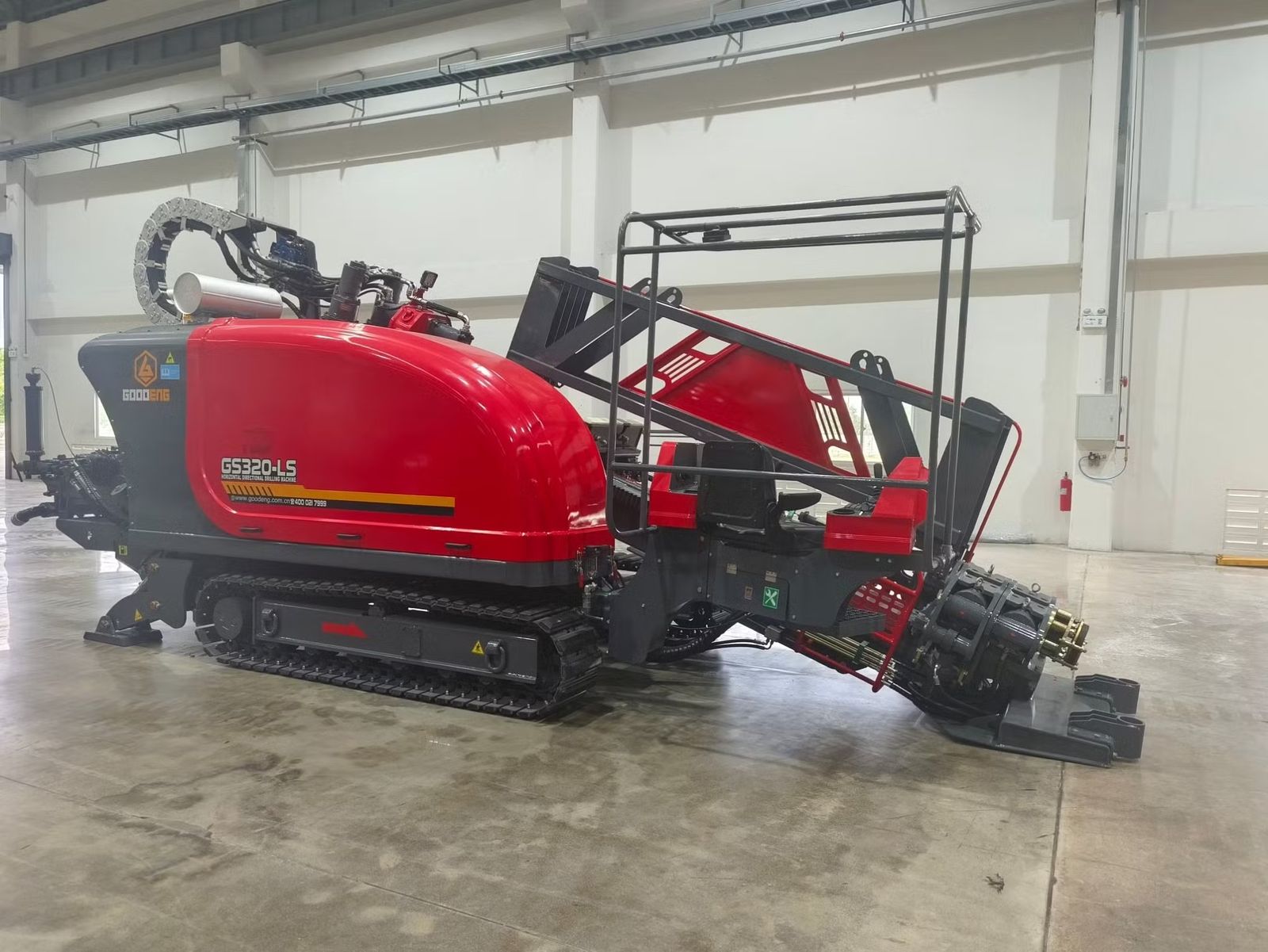
Mini, midi and maxi are useful terms when calling suppliers. The North American Society for Trenchless Technology (NASTT) uses the following small, medium and large pullback bands in its HDD training material. Manufacturers may group their products differently, so put the actual rating in the enquiry.
| Rig class | Rated pullback force* | When to consider it |
|---|---|---|
| Small / mini | Below about 18 metric tonnes-force (178 kN) | Utility ducts and smaller pipes where access or working width is tight. |
| Medium / midi | About 18–45 tonnes-force (178–445 kN) | Municipal mains and utility crossings that need more pullback or reaming capacity. |
| Large / maxi | Above about 45 tonnes-force (445 kN) | Major pipeline crossings where the pull, reaming and supporting plant justify a larger spread. |
*Rounded conversions from 40,000 and 100,000 lbf. Class boundaries describe the machine. Maximum crossing length and pipe diameter depend on the project.
2. What does a “20-tonne HDD machine” actually tell you?
First establish what the supplier means by tonnes. If the figure is metric tonnes-force of pullback, a 20-tonne rig is rated at about 196 kN. Machine transport weight is a separate figure. Ask for the exact model, configuration and datasheet, particularly if one quotation uses pounds and another uses tonnes.
| Model example | Published pullback, approximately | Spindle torque |
|---|---|---|
| Vermeer D24x40 S3 | 124.6 kN / 12.7 tf | 5,694 Nm |
| Apollo A800R Gen II | 196 kN / 20 tf | 6,500 Nm |
| Apollo A2000 | 1,180 kN / 120.3 tf | 39,477 Nm |
Pullback is the force available to draw the assembly towards the rig. Spindle torque is the turning effort available at the drill string. A contractor who has checked pullback still needs to explain how the machine will turn the selected reamer in your ground. Also check how long the rig can deliver its quoted force. For example, Vermeer lists 110 kN peak and 98 kN continuous pullback for its D24, a different model from the D24x40 S3 above.
3. Which factors govern HDD rig selection?
The product pipe and its allowable pull
Send the outside diameter (OD), material, wall thickness or SDR for polyethylene pipe, joint type and the manufacturer’s allowable installation pull. For ducts installed together, include a bundle sketch and the largest joint or fitting that will pass through the bore. The designer uses the actual installation envelope to plan the finished hole. The rig pulls the rods and reamer as well as the product, so its gauge reading and the tension on the pipe can differ. Ask how the bidder estimated each load and how pipe tension will be controlled.
The bore profile, depth and bends
Mark the entry and exit, required cover, known utilities and any obstacle the bore must pass below. Quote the surveyed or planned path length where available. A deeper crossing needs room to descend and return to the exit within the bending limits of the rods and pipe. Bends also add drag. If the exit pit is fixed beside a boundary wall, share that constraint before the vendor selects a drill string.
The ground, reamer and fluid system
Tell bidders where ground information comes from and where it ends. A log from a pit at the entry is useful, but conditions can change beneath the carriageway. For suspected rock, ask what pilot tooling and rock reamer are included, which drilling system drives them and what comparable ground the crew has worked in. Then ask how cuttings will be carried out during enlargement. A wider bore creates more material to remove, which can change the pump, water supply and fluid-handling plant the site needs.
The space on both sides
Measure the entry gate, usable working width, room for anchoring and access for rods, water and spoil vehicles. At the exit, mark where the pipe will be joined, laid out and fed into the bore. Ask for a marked-up layout of the entire setup. A rig can fit through the gate while its mud plant takes up the lane you promised to keep open.
4. How would the choice change on an actual enquiry?
These illustrative briefs show which question to resolve first. The dimensions are examples for comparing offers.
80 m under a town road · one 40 mm OFC duct
A compact utility rig is a reasonable starting point if the site investigation supports it. With shops on one side and a narrow verge on the other, first ask where the rig and fluid unit will stand, how services will be verified and where the tracker can work. A higher pullback rating does nothing to free up the footpath.
80 m under the same road · four ducts through suspected rock
The crossing length is identical. Now the bidder needs the bundle arrangement and evidence about the rock. Ask for the proposed finished bore, rock-cutting system, reaming sequence and fluid package. A nominally larger soil rig could still arrive without the tooling needed to finish. Price the rock contingency before comparing the per-metre rates.
450 m crossing · 315 mm OD polyethylene water main
Here the next decision is whether the surveyed profile and pipe specification support the installation. Request the predicted pipe tension, total rig pull, assumed ground, proposed capacity margin and pipe-string layout. Until the wall thickness, bends and subsurface conditions are established, assigning a 40- or 60-tonne rig from those two dimensions alone would give procurement a misleading specification.
5. Which HDD machine brands are available in India?
These manufacturers and suppliers publish India-facing HDD listings. Use the links to check the offered model, then confirm the actual machine, tooling, service coverage and mobilisation date for your district.
| Brand | What the Indian listing confirms |
|---|---|
| Apollo Techno | Indian manufacturer with compact utility rigs through to large pipeline machines. |
| Vermeer | Vermeer India lists Navigator utility drills, including the D24x40 S3. |
| XCMG | XCMG India lists the XZ450 Plus horizontal directional drilling rig. |
| Goodeng | Danan Construction identifies itself as an Indian dealer for Goodeng HDD machines. |
| Drillto | Drillto India lists several sizes, including a 16-tonne machine and the 300A model. |
| Ditch Witch | CB Machinery Solutions reports importing, refurbishing and supplying used Ditch Witch HDD machines in India. Check the offered unit’s year and service record. |
Goodeng’s presence in the Indian HDD market
Goodeng is a name Indian contractors are likely to encounter when comparing HDD offers. Its Indian distributor, Danan Construction, lists machines across several sizes and reports a presence on oil, gas and water pipeline projects, particularly in southern and western India. For a contractor evaluating a Goodeng rig, ask which models the provider already runs locally, where it stocks wear parts and who can reach your site if the machine stops.
Where Indian HDD manufacturers have room to grow
India has a wider choice of HDD brands than of home-grown rig makers. Apollo Techno manufactures HDD rigs in Gujarat. Its 2025 prospectus cites Dun & Bradstreet research that found few home-grown manufacturers in specialised trenchless and foundation equipment. That leaves an opening for Indian makers, particularly where they can offer what a contractor can verify before award: spares on the shelf, a service engineer within reach and a replacement tool available during the permitted road-closure window.
6. What should you send for an HDD work quotation?
State whether you need the crossing completed and handed over, or an HDD machine and crew to work under your supervision. For comparable bids, send every contractor the same brief.
- Location and route. Site pin, individual bore lengths, drawings, required cover and permitted working hours.
- Product and ground. Pipe OD, material, wall thickness, duct count, ground records and known service crossings. Mark unknown items for verification.
- Site and scope. Entry and exit photos, usable footprint, pipe laydown area and who provides pits, permits, water, traffic arrangements and reinstatement.
- Bid and handover. Ask for the exact rig, sizing basis, operator, tracker, tools, fluid equipment and a comparable job. Agree how installed metres are measured, what tests and bore records are due, and how rock, standby or a re-drill would be charged.
Give the service provider as much weight as the machine
Two bidders can offer the same rig and deliver very different crossings. Ask each bidder’s proposed operator and tracker to walk you through a similar job. Where did the ground change? How did they verify the bore position? Can they show the completed bore log? Then ask who can authorise a stop, who supplies substitute tooling and who stays until the installed duct passes the agreed acceptance check. Those answers help you compare the teams behind the machines.
If you need the crossing completed, specify the installed pipe or duct, required tests and handover records in your enquiry. Send RIGR your requirements for an HDD rig and service provider.
Questions before you book
What size HDD machine is needed for a 200 m bore?
Start with the pipe OD and count, ground profile, depth and available space. A 200 m pilot for a fibre duct and a 200 m crossing for a large water main have different reaming and pullback demands. Ask the contractor to identify which demand governs their choice.
Will a bigger HDD machine finish the job faster?
Ask for a programme covering mobilisation, setup, pilot drilling, reaming, pullback and reinstatement. A larger rig may offer more torque, yet the working window, rock tools or water deliveries may set the completion date.